Archive for the ‘history’ Category

Homeopathic democracy

Friday, September 30th, 2011

Before George Washington became president, he presided over the Philadelphia Convention at which the U.S. Constitution was drafted. Throughout the entire proceedings — which had its fair share of passionate disputes — Washington spoke up exactly once on an issue under debate. The proposed size of the U.S. House of Representatives was too small, he said. It would have meant one congressman for every 40,000 citizens. He insisted that one per 30,000 would produce a better, more responsive democracy, and so the change was made.

Within thirty years, as new states were admitted and the population grew, the ratio had grown to the level against which Washington had argued: 40,000 citizens per congressman. Four decades later and it more than tripled: 127,000 to 1. By this time the population of the country had grown from under two million to over 31 million, and the House of Representatives had gone from a cozy 65 members to a rowdy 241.

In 1912 the House of Representatives swelled to 435 members — roughly one for every 212,000 citizens — and there it was capped by legislation in 1929, by which time the ratio was more than 280,000 to 1.

If we had maintained that ratio, today the House would have 1,093 members. If we had maintained Washington’s ratio, today it would have 10,291 members. As it is we’re stuck with 435 — fewer than one congressperson for every 700,000 people. Some U.S. citizens have proportionally more Senate representation than House representation.

What was the cry of the Boston rioters in 1773?1 “No taxation without representation.” What would they have said about taxation with just a teensy amount of representation? No wonder our democracy is presently working about as well as a course of Oscillococcinum (the flu remedy so dilute that one dose contains none of its so-called active ingredients).

A ten thousand member Congress would probably be unmanageable. But a nation of three hundred million is (I think we can conclude from current events) ungovernable by a legislature so relatively small. Perhaps it’s time to reconstitute our national government. Here’s one idea off the top of my head for bringing representation closer to the people: add a level of hierarchy between the state and federal levels, according to the ten regions of American politics.

  1. No evocation of the modern day Tea Party is intended. []

Quitting time

Monday, February 14th, 2011

On this date fifteen years ago, several employees of NCD Software, formerly Z-Code, resigned simultaneously. I was one of them.

Two years earlier, Z-Code’s founder, Dan, sold out to Network Computing Devices over the objections of most of his staff. NCD, whose line of business had no discernable overlap with Z-Code’s, proceeded to drive Z-Code and itself right into the ground. Dan was the first casualty, lasting only a few months after the merger. NCD’s CEO and top VP, informally known as “the Bill and Judy show,” followed not long after. A lot of clueless mismanagement ensued. The energy of our once terrific engineering team dissipated before our eyes. We tried to turn things around, to make our bosses understand (for instance) that you can’t just tell an e-mail software team to make their e-mail suite into one of those newfangled web browsers that the new CEO had heard so much about, or that if you don’t pay your salespeople a commission for selling the company’s software, they won’t sell the company’s software.

Each time management did something boneheaded, we convened a session of “The Alarmists’ Club,” which met at lunch over beers and tried to think of ways to effect change at NCD. After enough of those proved fruitless, our discussions turned to how we could do things better ourselves. And so some time early in 1996 we sought the advice of a Silicon Valley lawyer about how to leave NCD en masse with minimal legal repercussions. The bulk of the advice was to put off discussion of any new venture until after the separation was complete; and to be aware that NCD was liable to use veiled threats, emotional pleas, and vague promises in an attempt to get us not to leave.

On 14 February 1996, NCD did all these things. We had prepared our terse resignation letters, offering two weeks notice, and delivered them in the morning. Within a couple of hours, Mike Dolan, one of the bigwigs from NCD headquarters in Mountain View, made the trip to the Z-Code offices in Novato to meet with us individually.

I was not yet 30, and when Dolan, an industry veteran, leaned on me in our one-on-one meeting I was definitely cowed. But my co-resigners and I had coached one another on how to withstand exactly the sort of combined intimidation and guilt trip that I was now getting, and so I stuck to my guns, kept the pointless justifications to a minimum, and refrained from blame or recrimination.

We maintained our solidarity, and because NCD declined our offer of two weeks’ notice, that was our last day there. We left feeling victorious, though what exactly we had won was never clear, and our sense of triumph was tempered by having effectively sandbagged our erstwhile coworkers.

After enjoying a few days of freedom it was time to start planning our new enterprise. But that’s another story…

Greatest hits: Shame

Saturday, August 14th, 2010

The publisher Tim O’Reilly wrote in a Buzz post recently,

I’ve always loved the ancient Greek idea of shame – aidos – as that quality that restrains people from doing wrong

which inspired me to add the following comment:

In a biography I once read of George Washington, the author (whose name, alas, I can’t remember at the moment) pointed out that his virtues, and those of many of his contemporaries, seem almost superhuman by today’s standards. By way of explanation he pointed out that life expectancy was much shorter then, so the pressure to achieve renown that would outlive you was consequently greater (not to mention that in a less populous world, such renown was within easier reach). You were gonna die soon, that was almost certain — but shame could kill your legacy, a more thorough and fearsome kind of death.

I think this has something to do too with the decline of shame (in addition to other obvious causes such as the rise of privacy, isolation, and anonymity). By and large we now live long enough to get over anything shameful that may happen. We see it happen again and again on the evening news, as disgraced public figures make unlikely comebacks. VH-1′s “Behind the Music” has turned the familiar arc of shame and redemption into a cottage industry. Shame is no longer something to be avoided at all costs. More’s the pity.

Right move made

Saturday, October 10th, 2009

Before the iPhone and the Blackberry was the Sidekick, a.k.a. the Hiptop, the first mass-market smartphone and, for a while, the coolest gadget you could hope to get. Famously, and awesomely, the Hiptop’s spring-loaded screen swiveled open like a switchblade at the flick of a finger to reveal a thumb-typing keyboard underneath, one on which the industry still hasn’t managed to improve. Your Hiptop data was stored “in the cloud” before that term was even coined. If your Hiptop ever got lost or stolen or damaged, you’d just go to your friendly cell phone store, buy (or otherwise obtain) a new one, and presto, there’d be all your e-mail, your address book, your photos, your notes, and your list of AIM contacts.

The Hiptop and its cloud-like service were designed by Danger, the company I joined late in 2002 just as the very first Hiptop went on the market. I worked on the e-mail part of the back-end service, and eventually came to “own” it. It was a surprisingly complex software system and, like much of the Danger Service, required continual attention simply to keep up with rising demand as Danger’s success grew and more and more Sidekicks came online.

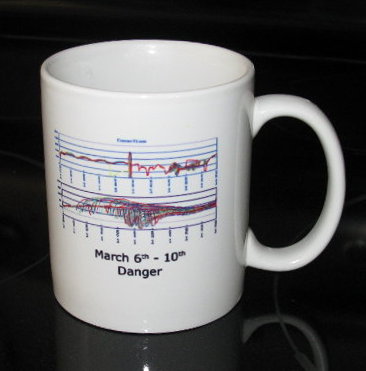
Early in 2005, the Danger Service fell behind in that arms race. Each phone sought to maintain a constant connection to the back end (the better to receive timely e-mail and IM notices), and one day we dropped a bunch of connections. I forget the reason why; possibly something banal like a garden-variety mistake during a routine software upgrade. The affected phones naturally tried reconnecting to the service almost immediately. But establishing a new connection placed a momentary extra load on the service as e-mail backlogs, etc., were synchronized between the device and the cloud, and unbeknownst to anyone, we had crossed the threshold where the service could tolerate the simultaneous reconnection of many phones at once. The wave of reconnections overloaded the back end and more connections got dropped, which created a new, bigger reconnection wave and a worse overload, and so on and so on. The problem snowballed until effectively all Hiptop users were dead in the water. It was four full days before we were able to complete a painstaking analysis of exactly where the bottlenecks were and use that knowledge to coax the phones back online. It was the great Danger outage of 2005 and veterans of it got commemorative coffee mugs.


The graphs depict the normally docile fluctuations of the Danger Service becoming chaotic

The outage was a near-death experience for Danger, but the application of heroism and expertise (if I say so myself, having played my own small part) saved it, prolonging Danger’s life long enough to reach the cherished milestone of all startups: a liquidity event, this one in the form of purchase by Microsoft for half a billion in cash, whereupon I promptly quit (for reasons I’ve discussed at by-now-tiresome length).

Was that ever the right move. More than a week ago, another big Sidekick outage began, and even the separation of twenty-odd miles and 18 months couldn’t stop me feeling pangs of sympathy for the frantic exertions I knew were underway at the remnants of my old company. As the outage drew out day after day after day I shook my head in sad amazement. Danger’s new owners had clearly been neglecting the scalability issues we’d known and warned about for years. Today the stunning news broke that they don’t expect to be able to restore their users’ data, ever.

It is safe to say that Danger is dead. The cutting-edge startup, once synonymous with must-have technology and B-list celebrities, working for whom I once described as making me feel “like a rock star,” will now forever be known as the hapless perpetrator of a monumental fuck-up.

It’s too bad that this event is likely to mar the reputation of cloud computing in general, since I’m fairly confident the breathtaking thoroughness of this failure is due to idiosyncratic details in Danger’s service design that do not apply at a company like, say, Google — in whose cloud my new phone’s data seems perfectly secure. Meanwhile, in the next room, my poor wife sits with her old Sidekick, clicking through her address book entries one by one, transcribing by hand the names and numbers on the tiny screen onto page after page of notebook paper.

Score one for the engineers

Wednesday, September 16th, 2009

I’ve been asked about the reason for my low opinion of Microsoft. It isn’t just me of course — a lot of technologists regard Microsoft that way. Here’s an anecdote that illustrates why.


The year is 1993. No one’s ever heard of the World Wide Web. Few people have even heard of e-mail. Too often, when I explain my role at the e-mail software startup Z-Code to friends and relatives, I also have to explain what e-mail is in the first place.

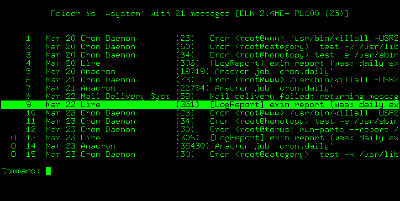
Those who do know about e-mail in 1993, if transported to 2009, would not recognize what we call e-mail now. To them, e-mail looks like this:

It’s all plain, unadorned text rendered blockily on monochrome character terminals. For the most part, variable-width, anti-aliased fonts are years in the future. Boldface and italic text exist only in the imagination of the reader of a message that uses ad hoc markup like *this* and _this_. Forget about embedded graphics and advanced layout.

However, in 1993 something has just been invented that will catapult e-mail into the future: the MIME standard, which permits multimedia attachments, rich text markup, and plenty more. Almost no one has MIME-aware e-mail software yet. Meanwhile, at Z-Code, we’re busy adding MIME capabilities to our product, Z-Mail. The capabilities are primitive: for instance, if we detect that a message includes an image attachment, we’ll launch a separate image-viewing program so you can see the image. (Actually rendering the image inline comes much later for everyone.)

The Z-Mail user is able to choose an auto-display option for certain attachment types. If you have this option selected and receive a message with an image attachment, your image-viewing program pops up, displaying the attachment, as soon as you open the message. (Without the auto-display option set, you explicitly choose whether or not to launch the viewer each time you encounter an image attachment.)

There comes the time that the marketing guy at Z-Code asks if we can add automatic launching of Postscript attachments, too. In 1993, Postscript is the dominant format for exchanging printable documents. (Today it’s PDF.) Turns out that a lot of potential Z-Mail users are technically unsavvy business types who exchange Postscript files often, jumping through tedious hoops to attach them, detach them, and print them out. Automatically popping up a window that renders a Postscript attachment right on the screen would be pure magic to them, changing them from potential Z-Mail users into actual Z-Mail users.

But there is a problem. Postscript files differ from image, sound, and other document files in one important respect: whereas those latter types of file contain static, inert data, requiring special programs to render them, Postscript files are themselves full-fledged computer programs. The Postscript renderer is just a language interpreter — like a computer within the computer, running the program described by the Postscript document.

Virtually all Postscript programs — that is, documents — are completely innocuous: place such-and-such text on the page here, draw some lines there, shade this region, and so on. But it’s perfectly conceivable that a malicious Postscript document — that is, program — can act as a computer virus, or worm, causing the computer to access or alter files, or use the network or CPU in mischievous ways without the user’s knowledge or approval.

So launching the Postscript interpreter with an unknown document is risky at any time. Doing so automatically — as the default setting, no less, which is what the marketing guy wanted — is foolhardy. (The reason it’s generally safe to send Postscript documents to Postscript printers — which include their own Postscript interpreters — is that unlike computers, printers do not have access to resources, like your files, that can be seriously abused.)

We, the Z-Code engineers, explain the situation and the danger. The marketing guy dismisses the possibility of a Postscript-based attack as wildly unlikely. He’s right, but we point out that adding the feature he’s asking for would make such an attack more likely, as word spreads among the bad guys that Z-Mail (a relatively widely deployed e-mail system in its time and therefore a tempting hacking target) is auto-launching Postscript attachments. Marketing Guy argues that the upside of adding the feature is potentially enormous. We say that one spam campaign containing viral Postscript attachments could cripple the computers of Z-Mail users and only Z-Mail users, a potential PR catastrophe. Marketing Guy says that our users don’t know or care about that possibility and neither should we. We say it’s our job to protect our users from their own ignorance.

The issue gets bumped up to Dan, our president, who is clearly leaning toward the marketing guy’s enormous potential upside. But after we vigorously argue the technical drawbacks of the plan and our responsibility to keep our users safe in spite of themselves, he goes with the suggestions from Engineering: do add a Postscript-launching option but turn it off by default, and educate users about the danger when they go to turn it on.


This is a run-of-the-mill example of the kind of tension that exists between Marketing and Engineering in all software companies. Issues like this arose from time to time at Z-Code, and sometimes Engineering carried the day, and sometimes Marketing did. It was a good balance: it took Marketing’s outlandish promises to keep Engineering moving forward, and it took Engineering’s insight and pragmatism to keep the product safe and reliable.

As an industry insider, my impression of Microsoft is that Marketing wins all the arguments, with all that that implies for the safety and reliability of their software.

Kai-Fu Lee and me

Saturday, September 5th, 2009

For the summer of 1987 I had two programming internship job offers. One — the one I accepted — was from Nathaniel Borenstein, who’d been my professor for a comparative programming languages course and liked my take on the design for an e-mail filtering language, which is what the school’s Information Technology Center (ITC) would pay me to implement. The other was to work on a speech recognition project with a different Carnegie Mellon researcher, Kai-Fu Lee. That project had a strong artificial-intelligence flavor, which appealed to me at the time; but after a semester as Nathaniel’s student I knew and liked him, whereas I’d met Kai-Fu Lee only once, for the job interview. That meeting was cordial enough, but I went with the known quantity and the rest is history.

I next heard of Dr. Lee in the 90′s, when he was a senior researcher for Microsoft. He made headlines when he fled Microsoft for Google — just as I did a few years later.

Now comes the news that Kai-Fu Lee is leaving Google. That’s too bad for Google, but at least we still have Al Spector — who was Nathaniel’s old boss and mine at the ITC!

You can’t spell leisure without (some of the letters in) socialism

Wednesday, September 2nd, 2009

The future, as seen from the 1920′s through the 1960′s, was one in which automation of ever-increasing ubiquity and reliability would liberate humans from every manner of drudgery: cooking, cleaning, driving, working. Thus liberated, the “permanent problem” of humanity, as celebrated economist John Maynard Keynes wrote in 1930, would be “to occupy the leisure” time that would be the inevitable result of consistent technological and economic progress.

Well, here we are in the future, and in spite of a conspicuous dearth of hovercars and Mars colonies, things are indeed fantastically more automated than they used to be. Those of us old enough to remember changing typewriter ribbons, getting up from the couch to change the channel, and painstakingly placing the tone arm in the shiny stripe between songs would never go back. Cars aren’t driverless — yet — but some of them do unlock when their owners approach, and some of them tell you when you’re about to back into the car behind you. Robots vacuum your floors. Satellites tell you how to get from point A to point B. And don’t forget the Internet, which allows you to shop, work, communicate, renew your driver’s license, look up airline schedules, and be informed and entertained without ever leaving the house, licking a stamp, picking up the phone, or indeed engaging any muscles north of your elbows.

And yet, I don’t know about you, but figuring out what to do with our copious leisure time doesn’t appear to be the problem of anyone I know.

Here in the era of Google and PDF files I am much more productive than I ever could have been in the bad old days of filing cabinets and mimeograph machines, and the same is true for pretty much everyone else, everywhere in the developed world. And after various innovations or outright revolutions in manufacturing, construction, supply chain management, materials science, agriculture, finance, chemical engineering, electronics, and plenty more, the cost of meeting our basic material needs is much less than it used to be.

So at first glance it seems like there should be lots more slack in our economic system, and that we ought to be able to distribute that slack to the benefit of everyone.

But when robots displace thirty percent of a factory’s labor force, the increase in productivity does not result in a life of leisure for the workers that were sent home. They’re just plumb out of work. When simpler delivery systems for news and for classified advertising come along, employees in the crumbling newspaper industry don’t kick back, job-well-done, satisfied at achieving their own obsolescence.

The investment blogger Brad Burnham recently pointed out that “Craigslist collapsed a multibillion dollar classified advertising business into a fabulously profitable hundred-million-dollar business” — an example of a phenomenon common enough to have a cool new name: the “zero-billion-dollar business.” Herein lies the problem that seems to have escaped the mid-century futurists: when dramatic efficiencies arrive in an industry, lowering its overhead, that industry doesn’t suddenly become more profitable, pocketing the difference between the new lower costs and the same old price for its goods and services, able to retire its laid-off laborers with cushy pensions. No: the industry passes the savings along to you, the consumer, according to the inexorable pressures of capitalism. Any company that didn’t would find itself undercut by its competitors. As a result, the entire industry deflates, occasionally to the vanishing point: witness the fate of horse-drawn buggies, ice vendors, and more recently, consumer-grade photographic film.

Disruptions like these are great for the majority (else they wouldn’t happen) but disastrous for those who become idled by them. In the past, the people affected would slowly filter into new positions elsewhere, but as is often observed, we’re living through a period of accelerating innovation and upheaval. It’s possible that entire job categories are disappearing faster than the remaining ones are able to absorb the jobless, and if we haven’t quite reached that tipping point yet, chances are good that we will soon. Technology and the enhanced productivity it brings means society is learning to get along — thrive, in fact — with far fewer people working, period.

Which begs the question: is this kind of progress ultimately good for humanity? Yes, it lowers the cost of our material needs, increases abundance, and lengthens and improves our lives, but only for those who remain employed and can afford the fruits of progress.

Take this trend to a plausible extreme. When driverless cars are perfected, there will be no more need for bus, truck, and taxi drivers. A coffeemaking robot in my office portends the demise of the barista. Voice recognition keeps getting better and keeps putting phone operators out to pasture. The postal service appears to be at the beginning of what promises to be a lengthy contraction.

It’s not hard to imagine a future in which only a small fraction of the eligible workforce is actually needed to do any work. Is the resulting wealth destined to be concentrated in fewer and fewer hands? What will the rest of us do?

In our march towards a shiny future of leisure we have overlooked one important ingredient, probably because it’s been taboo even to mention it. In a 2,500-word article about the world to come, written soon after the 1964 World’s Fair (which depicted that future temptingly and convincingly), and not coincidentally at the height of the Cold War, Time magazine glosses over the missing ingredient almost completely, giving it just three words at the beginning of this remarkable sentence (emphasis mine):

With Government benefits, even nonworking families will have, by one estimate, an annual income of $30,000 — $40,000 (in 1966 dollars).

(That’s about a quarter million today.)

That’s right: at the same time that Americans were getting worked up about the Red Menace, ironically they also embraced (without quite thinking it through) a vision of the future that depended fundamentally on socialism — the redistribution of wealth, by government, from those whom society needs and rewards to those whom it doesn’t but who stubbornly continue to exist.

Unfortunately, even as we’re headed towards a workerless society that will depend more and more on government assistance, we are abandoning our traditional values about civic responsibility and the common good. We are becoming a nation of selfish graspers who by and large would rather demonize the unemployed than provide for them (even if we could afford to, which isn’t at all clear). Too many Americans are opposed in principle to any form of welfare, even though it’s right there in the Preamble of the Constitution, even though they rely on social programs themselves, knowingly or not.

These folks cling to two soundbites from the 1980′s — “Government is not the solution to our problem, government is the problem,” and “Greed… is good” — in lieu of any reasoned philosophy. An entire generation’s worth of politicians and civic and religious leaders have built their careers around these empty ideas, all but precluding rational debate on the subject, a debate we desperately need to have. We are barreling towards that efficient, workerless future, that’s for certain. But when the merest suggestion of government assistance prompts mobs to equate President Obama with Hitler or Satan, what hope is there that that future will even be livable?

What’s in a number, part 2

Saturday, May 30th, 2009

Gay-rights activists everywhere are abuzz with political strategy in the wake of last week’s decision by the California Supreme Court to uphold the ballot measure, Proposition 8, in the face of a challenge to its constitutionality.

I admit I’m a little confused. Proposition 8 was clearly flawed, but why do gay-rights activists in particular care so much about a mildly hysterical attempt to keep drugs out of K-12 classrooms, toughen teacher credentialing standards, and reduce class sizes? Besides, even though it was a long time ago, I seem to recall that measure failing at the ballot box, so what is there to uphold, and why all the furore now?

Ohhh… it’s the Proposition 8 of 2008 that everyone’s buzzing about, outlawing gay marriage; not the Proposition 8 of 1998. Well that explains everything…

…except why California has two Proposition 8′s. I arrived in this state in time to vote on propositions 152 through 154 (and to choose Bill Clinton as my party’s candidate). I still remember the controversy over Prop 187 a couple of years later. Even today people still refer to 1978′s Prop 13 as shorthand for the state’s constant budgetary woes. For decades, California’s ballot initiatives were numbered sequentially, which meant that important propositions, which were occasionally burdened with awkward titles (“Permanent class size reduction funding for districts establishing parent-teacher councils; requires testing for teacher credentialing; pupil suspension for drug possession”), had a unique, handy-dandy built-in nickname.

Until 1998. In the primary election that June, voters weighed in on propositions 219 through 227. Then, unaccountably, the numbering system reverted to 1 for the November ballot, started at 1 again in 2000, counted sequentially for a while, then rolled over to 1 once more in 2008 after reaching only 90 in 2006.

I know California’s education system is badly broken (thanks, most agree, to Prop 13 — the 1978 one), but really, I think most voters can count at least a little higher than 227.

(Previously in inexplicable innumeracy.)

A much better George W.

Sunday, January 25th, 2009

Speaking of presidential inaugurations, it was only a few days ago that we were deeply moved by watching America’s latest one; and then last night we watched the very first one — that of George Washington, also very movingly staged, in the HBO miniseries John Adams.

The kids have been clamoring to watch each new episode of this enriching and educational show, which we pause often for discussion. They love it! How lucky am I?

Once in a lifetime

Tuesday, January 20th, 2009

This morning we woke up a little earlier than usual. I sent e-mail to Jonah’s teacher saying he’d be late to school. We ate breakfast, piled into the car, and drove to 142 Throckmorton, a theater in downtown Mill Valley. The sky was blue and the bright sunshine made it too warm for the jackets we wore. Inside the theater were old hippies, young families, and teens gathered to eat pastries, drink coffee, and watch Barack Obama take the oath of office. On the screen at the front of the theater, C-SPAN showed the activity on the steps of the Capitol and the throngs packed onto the National Mall. The crowd cheered for Bill Clinton and booed for Bush and Cheney. We took our seats, Jonah on my lap, Archer and Andrea beside me. Obama appeared and the kids began to cheer without any prompting. The audience rose to its feet for the first of several times. We watched the ceremonious proceedings with our arms around one another, exchanging frequent smiles. Andrea and I cried. Obama was sworn in; the place erupted with jubilation. He delivered his speech. The kids asked questions; we explained. Many times, a phrase spoken by Obama was answered with a heartfelt “Yeah!” from one person or another in our audience. “We will restore science” — huge cheers. “We reject as false the choice between our safety and our ideals” — huge cheers. Afterward: catharsis, hugging, strangers congratulating one another, and as we filed out, an impromptu drum circle on the street.

It meant more to me than I can express to watch this inauguration with my sons in my embrace, all of us appreciating the historic importance of the occasion. It is for them, after all, and for their adorable counterparts Malia and Sasha, that President Obama and I must fix America.